What you’re entitled to
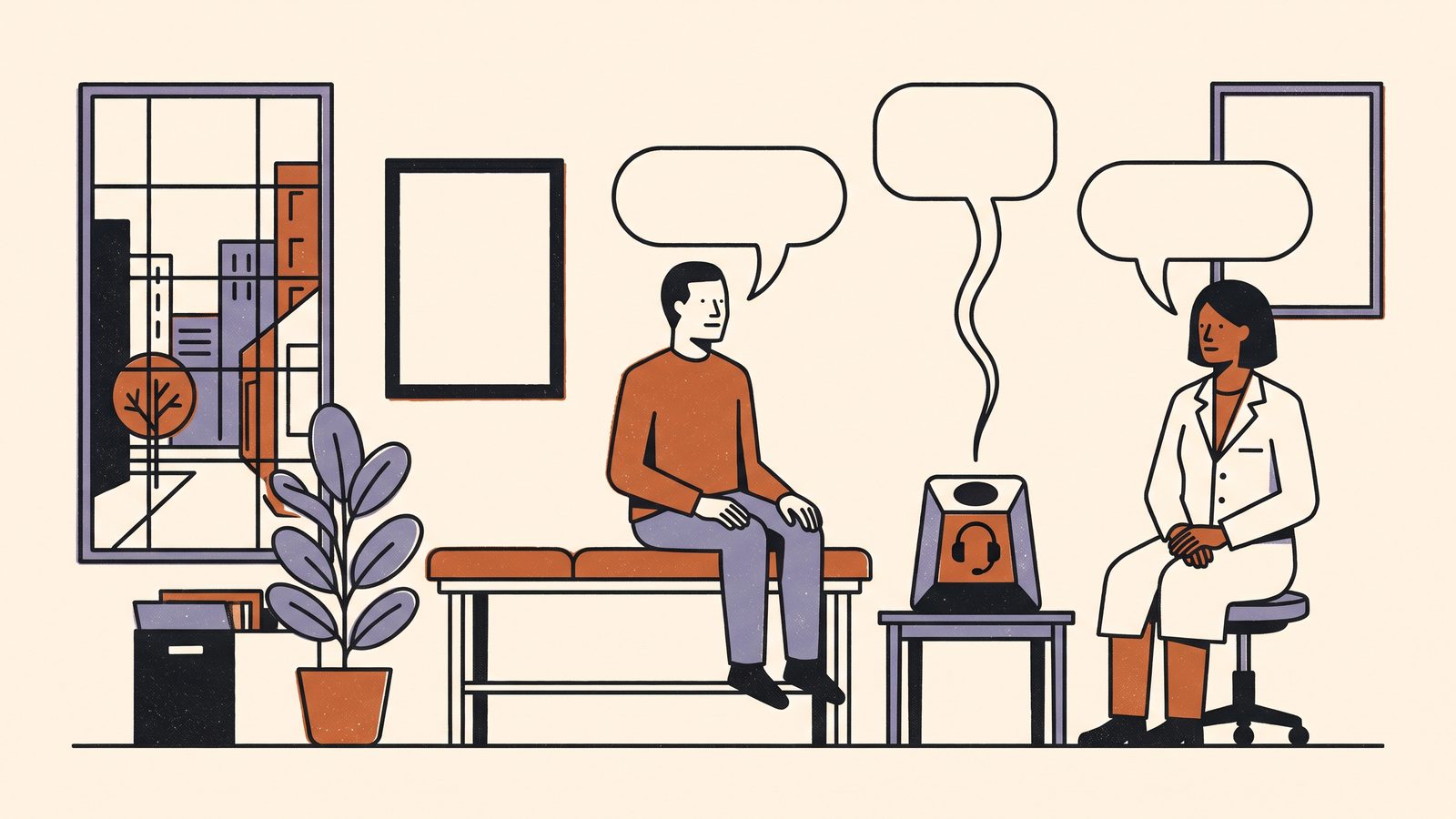
Providers receiving federal funds — Medicare, Medicaid, or federal grants — are obligated under federal civil rights law to take reasonable steps to give people with limited English proficiency meaningful access to their services. In practice that means an interpreter, at no cost to you, in a language you actually speak.
New York layers additional requirements on top, and New York City is one of the most language-diverse jurisdictions in the country — public hospitals here routinely operate in dozens of languages, over the phone within minutes.
The right covers the whole encounter, not just the doctor:
- Registration and intake
- The clinical conversation itself
- Consent forms — you cannot meaningfully consent to something explained in a language you don’t follow
- Discharge instructions, which is where the most damage happens when interpretation is skipped
- Medication instructions at the pharmacy counter
- Financial and billing conversations
How to ask, so it happens
Ask at registration, before you’re roomed. The interpreter line takes a few minutes to connect; asking at the point of care means waiting while a doctor stands there, which is how “let’s just manage” happens.
Name the language precisely. “Spanish” is a large category — a Dominican patient and a Mexican patient may both be fine with a general Spanish interpreter, but if a specific dialect matters to you, say so. For less common languages — Bukharian, Georgian, Fuzhounese, Garifuna — say the specific name, not the umbrella. Phone-based services carry far more languages than most patients assume.
If you’re refused or discouraged, say this:
“I’m requesting a professional interpreter in [language]. Please note in my chart that I requested one.”
The second sentence is the one that changes behavior. A documented request is a record.
Ask for written materials in your language. Discharge and medication instructions in particular. If they don’t exist, ask the interpreter to read them to you and to note that this happened.
Why not just bring your daughter
Family interpreting feels efficient and is the single most common way medical information gets distorted in this city.
A relative doesn’t know the clinical vocabulary, may soften bad news to protect you, may edit your symptoms out of embarrassment, and — if the patient is the one who speaks English — ends up carrying responsibility for a medical decision they’re not equipped to carry. With a minor child, all of this is worse, and the child then holds information about a parent’s illness that no ten-year-old should be handed.
You are allowed to use a family member if you insist. You should not be told to.
What happens when this goes wrong
The failures are mundane and they compound: a discharge instruction misunderstood, so a medication is taken twice a day instead of every other day. A consent form signed without comprehension. A symptom that goes unmentioned because there was no way to describe it. A follow-up appointment that never gets scheduled because nobody explained it was necessary.
None of that shows up as a language complaint. It shows up later as a readmission.
If it keeps happening
- Ask for the facility’s patient advocate or patient relations office and file a complaint in writing.
- The New York State Department of Health takes complaints about hospital practices, including language access.
- For discrimination based on national origin, the federal Office for Civil Rights takes complaints directly.
- Local community organizations — particularly immigrant-serving nonprofits — often escalate faster than an individual can, because they have standing relationships with hospital administrations.
The two laws behind the right, and why the difference matters
There are two obligations here, they come from different places, and knowing which one you are invoking changes who is allowed to say no.
New York City’s Local Law 30 of 2017 binds city agencies. They must translate their most commonly distributed documents into the ten designated citywide languages, provide telephonic interpretation in at least 100 languages, and post multilingual signage about free interpretation. The ten are Spanish, Chinese, Russian, Bengali, Haitian Creole, Korean, Arabic, Urdu, French and Polish — the first six set from Census data on limited-English-proficient New Yorkers, the next four from Department of Education data.
Federal Section 1557 binds health programs and activities, which is what covers a hospital or a clinic. It requires language assistance free of charge, an annual Notice of Availability in English plus at least the 15 languages most commonly spoken by limited-English-proficient people in the state — in force since July 5, 2025 — and a qualified interpreter: someone who interprets effectively, accurately and impartially, without changes, omissions or additions.
A third rule sits underneath both: New York’s Uniform Hospital Financial Assistance Application must be printed in the primary languages of the patients a particular hospital serves, set by regulation rather than by the citywide list. So a document that exists at a city office may not exist at a hospital two blocks away — and the answer then is the interpreter right rather than the translation right.
By language
Each of these covers what is specific to that language rather than repeating the rules above: whether naming the language is enough or a variety has to be named, what exists in writing versus only by phone, and which pages of this site that reader most needs next.
Chinese — the law says “Chinese” in one word and the interpreter line does not · Russian — where the conversation is usually Medicare, which has its own rules · Bengali — naming the language is not the same as naming the variety · Haitian Creole — separately designated from French, and asking for the wrong one gets the wrong interpreter · Korean — a translated document and an interpreted conversation are two different rights · Arabic — the written form and the spoken interpreter need two different answers · Urdu — spoken and written pull apart, because the scripts differ · French — often the language the system can offer rather than the one you would choose · Polish — being on the city’s list and being on your hospital’s list are two different things
Spanish is the tenth designated language, and the answer for Spanish speakers is not a page about Spanish: it is the Spanish edition of this site, written independently rather than translated.
Questions people ask
Do I have to pay for an interpreter?
No. If an interpreter charge appears on your bill, that’s an error worth disputing in writing.
Does this apply to a small private practice?
The federal obligation attaches to providers receiving federal funds, which covers most practices that see Medicare or Medicaid patients. A small cash-only practice may fall outside it — worth asking before you book.
What about telehealth?
The same obligation applies. Ask when you book, not when the video starts.
My English is decent but medical vocabulary isn’t. Can I still ask?
Yes. The standard is meaningful access, not whether you can order coffee. Nobody is required to be fluent in clinical terminology.
Is there a right to a specific interpreter?
No, but you can decline one who isn’t working — a bad phone connection, a dialect mismatch, a relative pressed into service — and ask for another.
In this section
Getting Care in Chinese in New York: The Law Names One Language, the Interpreter Line Needs Four
Local Law 30 names Chinese as one citywide language. The interpreter line does not work that way: name Mandarin, Cantonese, Fuzhounese or Toishanese — then ask for it in writing.
Getting Care in Russian in New York: The City's Language Rules Stop Before Your Medicare Plan
Russian is a designated citywide language, so city agency documents exist in it. But Medicare, the Savings Programs and long-term care are not city programs: three rules, three desks.
Getting Care in Bengali in New York: Naming the Language Is Not the Same as Naming the Variety
Bengali is a designated citywide language, but Bengali and Sylheti are not the same and no registration desk knows it. Say which one you speak, and say it again if the match is wrong.
Getting Care in Haitian Creole in New York: Asking for French Gets You the Wrong Interpreter
Haitian Creole and French are two separate entries on New York City's list of ten designated languages. Asking for the wrong one is the most fixable failure in this subject.
Getting Care in Korean in New York: Translation and Interpretation Are Two Separate Rights
A document in Korean and an interpreter in the room come from two different laws. Which one you are asking for decides who you ask, and what you can still read afterwards.
Getting Care in Arabic in New York: The Written Form Is One Language, the Spoken One Is Not
A document in Arabic reads the same for everyone. An interpreter booked only as Arabic may not match you, and naming your country or region is what fixes the booking.
Getting Care in Urdu in New York: Spoken Help and Written Help Are Two Separate Requests
Urdu is a designated citywide language, but an interpreter and a translated form are separate asks. Urdu and Hindi share speech, not script — say which one you need.
Getting Care in French in New York: French Is Often What the System Can Offer, Not What You Would Choose
French is one of the ten designated citywide languages and Haitian Creole is another — they are not substitutes. If French is your second language, ask for your first by name.
Getting Care in Polish in New York: Being on the City's List and Being on Your Hospital's List Are Two Different Things
Polish is one of the ten designated citywide languages, but that rule binds city agencies. A hospital answers to Section 1557 and to a separate state rule about its own patients.
Sources
- NYC Mayor's Office of Immigrant Affairs — language and disability access (checked 2026-09-15)
- HHS — Section 1557 and limited English proficiency (checked 2026-09-15)
- NYC Health + Hospitals — language services (checked 2026-08-12)
- New York State Department of Health (checked 2026-08-12)
More in You Have the Right to an Interpreter — Here's How to Use It
- Getting Care in Arabic in New York: The Written Form Is One Language, the Spoken One Is Not — A document in Arabic reads the same for everyone. An interpreter booked only as Arabic may not match you, and naming your country or region is what fixes the booking.
- Getting Care in Urdu in New York: Spoken Help and Written Help Are Two Separate Requests — Urdu is a designated citywide language, but an interpreter and a translated form are separate asks. Urdu and Hindi share speech, not script — say which one you need.
- Getting Care in French in New York: French Is Often What the System Can Offer, Not What You Would Choose — French is one of the ten designated citywide languages and Haitian Creole is another — they are not substitutes. If French is your second language, ask for your first by name.
This page explains how the system works. It is not medical advice. More.